
When I started writing picture books, I knew I wanted to write in rhyme. And when I started this blog, I knew I wanted to have a conversation about it. I love rhyme, but there’s so much conflicting advice. Personally, I’ve heard the following: “Don’t write in rhyme.” I couldn’t listen to this because it was the whole reason I started writing for kids in the first place. After enough research, that changed to: “Don’t write in rhyme badly.” Okay! A way forward. I had to learn meter. I had to learn a new definition for the word “foot.” (Will you indulge a short musical number? “I wanna be where the rhymers are. I wanna see, wanna see their scansion. Counting their metrical, what do you call ‘em? Oh, feet.”) And finally: “Don’t write in rhyme predictably.” Even perfect rhyme and perfect meter fall flat if it’s too sing-songy. I wanted to speak with another rhymer about their journey, to find out if they heard the same advice, to learn the ways they processed it and persevered. So I’m thrilled to be chatting about rhyme with fellow rhymer, Lisa Davis! Spoiler Alert: Lisa and I have made a lot of the same mistakes. But we didn’t let that stop us. If you love rhyme, or you’re eager to learn about it, this interview is for you!
Let’s meet Lisa!
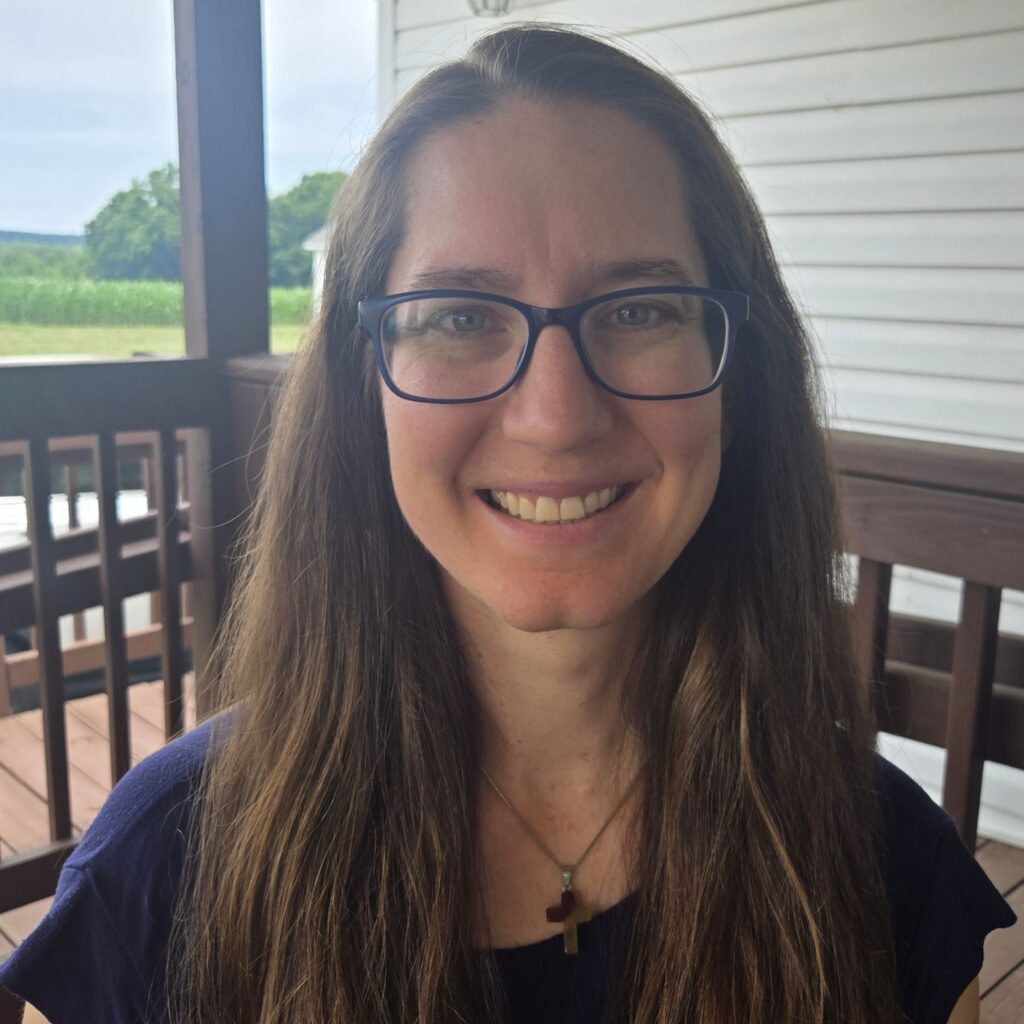
LISA DAVIS (she/her) is a writer, wife, mother, and former teacher. She lives by the motto, “It takes a village to write a picture book!” and to that end, she’s a member of the Kidlit Firefly Community, active on Twitter/X, and participates in contests, critiques, and giveaways. She won the Write Kidlit Now! Scholarship (2025), the Chuckle Challenge (2025), Susanna Hill’s Halloweensie (4th Place, 2025), and was an Honorable Mention in the Kidlit Firefly 100 Mighty Kind Words Contest (2026).
When she isn’t writing, you can find her outdoors in the garden or dreaming of the mountains. She loves hiking and would love to learn to play the mountain dulcimer. (Tragically, she has no musical talent.) She’s an avid sports fan, and is also passionate about food and nutrition.
Q: WELCOME TO THE BLOG, LISA! WHEN DID YOU START WRITING PICTURE BOOKS? WHY DID YOU START WRITING PICTURE BOOKS?
I wrote my first “picture book” when my now 11-year-old was two and potty training. She wouldn’t stay on the toilet so I started reading to her. Then, she wanted me to make up my own stories! I made up so many I started forgetting them, but knew they were “good,” and started writing them down. The first one I ever wrote down was about a javelina.
I didn’t write again until she was in Kindergarten. Then, I drafted two stories: one was a rhyming manuscript about a skunk, and the other was about a class of animals. The rhyming one was not in meter and the class story was 997 words because I read that picture books needed to be under 1,000 words. I knew nothing! And I queried them!
I ALSO WROTE A RHYMING STORY BEFORE I UNDERSTOOD METER. AND I ALSO QUERIED IT! OOPS. BUT I DON’T REGRET IT BECAUSE I LEARNED A LOT THROUGH THE QUERYING PROCESS.
Yeeees! I actually got a few personalized rejections for my skunk story, which gave me hope and a little confidence that I could become an author. I kept writing here and there, but it wasn’t until I joined Twitter/X in 2023 that I realized I was missing community and started taking my writing more seriously.
Q: WHAT DO YOU WRITE?
I mostly write humor! And it can get a bit absurd at times. But I’m also working on a grief story and a couple lyrical stories. I write in both prose and rhyme. I have really fallen in love with rhyme. (And apparently I can’t win a contest unless it’s in rhyme. Haha!)
Q: HOW DID YOU LEARN TO WRITE IN RHYME? WAS THERE A SPECIAL RESOURCE THAT HELPED?
It took a lot of work! At first, I had no idea what I was doing. Then, I started counting syllables. But that wasn’t right.
Going into PBParty 2024, I won a manuscript ranking and the person who ranked my stories questioned my meter. I had no clue what that was, so I started researching. Luckily, one of my CPs was dabbling in rhyme, and we started helping each other try to figure out meter. My husband is musical, so he would count beats to see if things were working that way. But music and story rhyme/meter can be very different, and I was still struggling.
I wanted to take a class, but we didn’t have the extra money. So I started watching YouTube videos. Renée LaTulippe’s videos were the most helpful. By watching her scan manuscripts, I learned the ins-and-outs of meter in a way I couldn’t by simply reading blogs. I applied what I learned to the stories I’d written and joined a rhyming critique group. It didn’t last, but I did get a great CP from it. And the added bonus… I realized I had actually learned meter!
I GIVE YOU A HUGE AMOUNT OF CREDIT FOR DIVING IN AND TEACHING YOURSELF. I TRIED TO DO THAT, BUT IT STILL DIDN’T MAKE SENSE TO ME. I ENDED UP LEARNING IN A CLASS!
Lucky! Haha. Since then, I’ve won a few contests using rhyme! For one of my prizes, I chose Tracy Gold’s Rhyming Course. It confirmed that I did, in fact, know what I was doing even if I didn’t have all the terminology.
FOR SURE. ONE OF MY STORIES IS WRITTEN IN IAMBIC TETRAMETER, BUT I DON’T GO AROUND DESCRIBING IT LIKE THAT!
Q: WHAT WOULD YOU RECOMMEND TO WRITERS WHO WANT TO LEARN RHYME/METER?
A class will speed track your learning, but it’s NOT impossible to learn on your own! Look for writers who are also learning rhyme or already have and are willing to help you. There are also contests that give rhyming courses as prizes. For example, #50PreciousWords usually has Renée LaTulippe’s Rhyme and Meter Self-Study Course as a prize and the Chuckle Challenge is where I won Tracy Gold’s How to Write Rhyming Picture Books Course.
If you can’t take a class or wait to win a prize, YouTube is a great resource. You can also read blogs (some even have giveaways that can be helpful for any author). I recommended the websites of Joy Moore and The Rhyme Doctors. (I especially love the post where The Rhyme Doctors share keeping track of mentor texts and cataloging them.)
RENÉE LATULIPPE IS FANTASTIC! I ALSO WANT TO SHOUT OUT CARTER HIGGINS, MIRANDA PAUL, AND BAPTISTE PAUL AS AWESOME TEACHERS. CLASSES WITH THEM REALLY ELEVATED MY RHYME.
Q: MANY OF US HAVE HEARD WE SHOULDN’T WRITE IN RHYME BECAUSE IT’S TOO HARD TO GET RIGHT. IT’S TOO HARD TO ENTICE AN AGENT WITH RHYME AND IT’S TOO HARD TO SELL TO EDITORS. DID YOU EVER LET THAT DISCOURAGE YOU?
Yes! Haha. But I think writing in rhyme is only hard because it’s not something we learn growing up. Sure, we learn nursery rhymes and words that rhyme, but not the how-tos, ins-and-outs of rhyming. It does take desire and there is a learning curve. I think it’s a hard sell to agents and editors because they also have to have a desire to learn meter, and it is hard to translate for international markets. But some of the best advice I’ve heard is to “write the story that speaks to you.” Rhyme is a part of me. There’s no way I can get away from it. Sure, it may take longer to sell, but I want these little pieces of me out in the world in all their wild and wacky glory.
Q: WHY DO YOU LIKE TO WRITE IN RHYME?
I could write a hundred page book on why I like rhyme, but here are a few highlights:
- It’s a challenge, like a puzzle. Can I say what I want in the right meter and perfect rhyme, or do I need to change the way I see things going forward?
- It lets me fit my story into a specific structure. Am I forcing rhymes or is my plot moving?
- It’s not all nursery rhymes and Dr. Seuss. You can make rhyme your own and give it your voice!
- There’s a rhythm to it, and though I am not musical, it keeps me active during revisions. I’m always snapping or patting my way through them.
- It makes me rebellious, finding fun ways to surprise the reader in rhyme.
Q: HOW DO YOU DECIDE IF YOU’LL WRITE A STORY IN RHYME?
I’m a weirdo who sings couplets and rhymes all day long to my kids… either because I’m tired or because something just pops into my head. Some of these get turned into stories, some get lost to the wind, and some go into my idea folder. (I should’ve learned from potty training my daughter to write more things down!)
If it’s an idea that doesn’t come from a couplet or a random rhyme that springs to mind, it will most likely be written in prose.
IT’S SIMILAR FOR ME. HOWEVER, I’VE ALWAYS HEARD WRITERS SHOULD HAVE A “REASON” TO RHYME. FOR EXAMPLE, I LISTENED TO AN INTERVIEW WITH A WRITER WHO WROTE A BAKING STORY. THEY SAID THEIR STORY HAD TO BE IN RHYME BECAUSE THERE’S A COMFORTING RHYTHM TO BAKING AND THE RHYME CAPTURED THAT.
Q: DO YOU THINK ABOUT THIS? DOES IT FACTOR INTO YOUR PROCESS?
I think there’s truth to that, but I also think there’s truth in just writing the story you want.
There are times a rhyming story may need to be written in prose to make the message stronger. But if rhyme is in your heart, it’s there for a reason. While I don’t write all my stories in rhyme, the couplets I create draw me into the story. For me, rhyme is beauty, art, and sport. I enjoy it and that’s all the reason I need. Of course, I’ll reevaluate and consider taking something out of rhyme if it’s not working. But I write the stories I’d enjoy reading to my kids, and for other kids who enjoy a rhyme that’s a little out of the ordinary. All this to say, I don’t think your reason to rhyme needs to be too deep. It can be beauty, art, and/or sport.
Q: WHAT IS YOUR CURRENT FAVORITE PICTURE BOOK? WHY?
Since I mostly write humor and love stimulating rhyme, I would have to say THE BOOK THAT ALMOST RHYMED by Omar Abed and Hatem Aly. But I also want to study WHERE THE DEER SLIP THROUGH by Katey Howes and Beth Krommes. Though it’s not the style in which I rhyme, I think it’s genius and know I could learn a lot from it.
I’VE NEVER READ THAT LAST ONE. I’LL HAVE TO CHECK IT OUT!
Q: CELEBRATE YOURSELF! WHICH WRITING ACCOMPLISHMENT MAKES YOU FEEL THE PROUDEST?
I have to say winning the Write Kidlit Now! Scholarship. When I read that email, I turned to my husband and said, “Oh my gosh! I won that scholarship! I’m going to be an author!” Though it doesn’t directly translate into representation or publication, it has given me the confidence I can make it someday.
SOMETIMES, THAT’S HALF THE BATTLE! YOU HAVE TO CONTINUOUSLY MAKE THE DECISION TO KEEP GOING. SPEAKING OF WHICH…
Q: HOW DO YOU HANDLE REJECTION?
::PLUGGING MY EARS:: La! La! La! I can’t hear you. Just kidding.
In all seriousness, rejection is hard. I’m not sure it gets easier because I believe in each query. I don’t send them out willy-nilly. I really believe that agent I submitted to and I would work well together. I really believe that contest entry was the best I could do. But then, I get a rejection.
It hurts, but it’s not surprising anymore. I share it with my husband, and sometimes my CPs. I allow myself to have the feels. But I remind myself my worth isn’t in my stories, an agent, or a contest. When it feels like I’m drowning in rejections and imposter syndrome, I try to focus on the destination. My perfect fit is out there somewhere, and that’s exciting to think about!
Q: WHAT KEEPS YOU WRITING?
I’ve always been a busy person. After becoming a stay-at-home mom, I slowed down a little, which gave me the chance to write. I was surprised to find it has been extremely stimulating. I probably wouldn’t have started writing, at least seriously, if I didn’t stay home. That doesn’t mean I don’t go through dry spells or get imposter syndrome (*hem-hem right now*), but I keep coming back. I love it!
I also write for my kids so they can see me achieve my dreams. And I write for other kids who will love my wacky voice and style. I hope to inspire them to love to read and write. Once, a fellow teacher told me they overheard a conversation between two of my former students. One always dragged his feet in my English class, but was telling his classmate he was writing a story. “Since when do you like writing?” the classmate asked. And the first student replied, “I don’t know. I guess since Mrs. Davis made us.” THAT keeps me writing.
Q: WHAT HAS WAITING FOR YOUR “YES” TAUGHT YOU?
Oh gosh. It’s taught me I want this… like really want this because I love writing. But if it wasn’t for the “nos,” I wouldn’t know how to handle the slumps or even the yes! I’ve always struggled with needing to achieve to feel accomplished. But waiting for the “yes” is teaching me about the beauty of the journey. I don’t think I would appreciate it as much if I didn’t have to wait.
Thank you for making this conversation about rhyme come true, Lisa!
I love chatting about rhyme almost as much as I love reading it. And writing it! However, I do think it helped that I jumped into it without knowing “the rules.” It allowed me to get that first story on paper without my inner editor being too loud. So… if you’re writing rhyme for the first time, it’s okay to put the rules aside. You don’t need them for a first draft. But when it’s time to revise or find a mentor text or if you’re kicking yourself for making a mistake… come back to this interview and realize you’re not alone! There’s no way to learn rhyme without committing a few “crimes.” As Lisa said, you’ve got to get rebellious.
If you’d like to keep in touch with Lisa, you can follow her on Twitter/X as @FuneverWriting. Or leave a comment for her below! This week, Lisa is giving away a RHYMING (OR NON-RHYMING) PICTURE BOOK CRITIQUE (1000 words or less). Rhymers, take note! In order to enter, subscribe to the newsletter! Everyone who’s subscribed by 11:59PM PT on July 8th, 2026 is eligible to win. If you’d like an extra entry, share this post on Bluesky. (No purchase necessary. You must be 18+ to enter. DMs must be open on Bluesky!)
GIVEAWAY WINNER: STEFANIE R.!
Leave a Reply