
Ever since this blog’s anniversary, I’ve been having a lot of thoughts… about websites! I never had a web presence before, and I never wanted one. I figured one day I’d have an author website, but in the interim, social media was enough. Then, Twitter imploded. I deleted my account. I reconnected with most people on Bluesky, but it was a lesson that not all platforms are forever. And so, I wanted to discuss websites! Do writers need them? Do illustrators need them? I admit the answers to these questions depend on your personal situation. Maybe your answer is “no.” Maybe your answer is “yes.” Maybe it’s “not right now.” No matter your answer, I wanted to demystify this topic, making it seem less intimidating and more accessible. I’m the first to admit I’m not tech-savvy, eyes glazing over when I hear the term “hosting.” If that happens to you – 1) You’re not alone, and 2) I’m encouraging you to push past it. You don’t have to create a website tomorrow, but if you start familiarizing yourself with the subject, you’ll be ready in the future. To help us learn the basics, I’m speaking to Sondra Eby! Sondra is a kidlit writer and website designer, who’s previously taught workshops on this topic for creatives. I’m so thrilled they agreed to an interview.
Let’s meet Sondra!
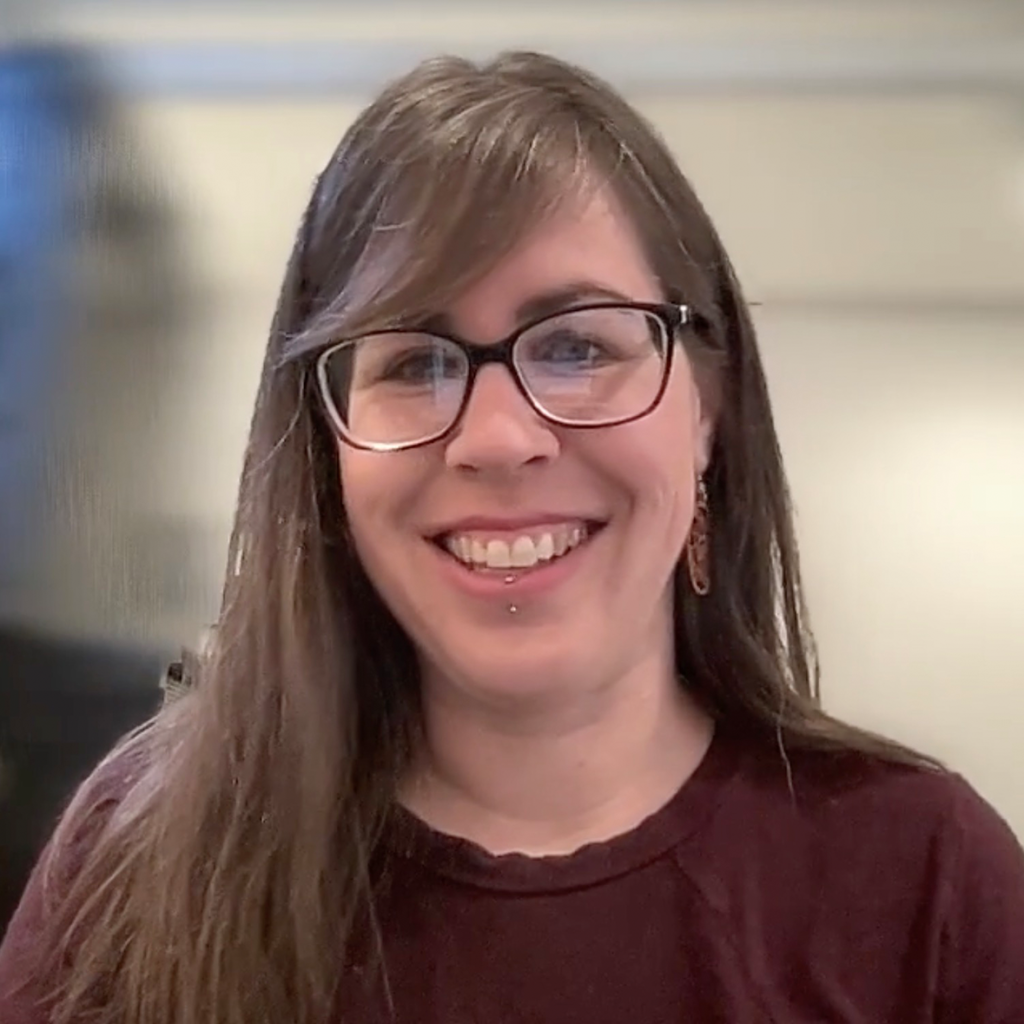
SONDRA EBY (she/they) writes picture books through YA novels, winning WriteMentor and Kids’ Choice KidLit Contest awards. They are an active member of SCBWI – mentoring and giving talks on web design for authors – and have worn many professional hats, including bookstore owner, YA library assistant, and web designer.
When not writing, Sondra plays drums for Teacup Gorilla, an indie rock band that creates original scores, like a queer gothic rock adaptation of Jane Eyre.
Q: HELLO, SONDRA! TO KICK THINGS OFF I ALWAYS LIKE TO ASK… WHY DID YOU START WRITING PICTURE BOOKS?
In third grade, I wrote and illustrated my first picture book. When I won first place for my story, I decided I would become an author! My writing journey since then has been bumpy, twisting, sometimes shrouded in fog, but I came back to picture books in 2022. I matched with Dan Graham, a talented picture book author, in the Rocky Mountain SCBWI Mentorship Program. With him, I worked on a rhyming story about a super science sleuth and a math/baking story based on my own struggle with dyscalculia (think dyslexia with numbers).
Q: AS READERS OF THIS BLOG KNOW, I LOVE RHYME. IS THAT MAINLY WHAT YOU WRITE?
Actually, my sweet spot seems to be narrative stories with humor and STEAM themes. Rhyme is very exacting, but I’m slowly getting better at it.
Q: WHAT IS YOUR CURRENT FAVORITE PICTURE BOOK? WHY?
CLOUDETTE by Tom Lichtenheld is my first love. I love its silliness, movement, and colors. I also love BLOB by Anne Appert and GO, BABY, GO! written by Tara Dairman and illustrated by Olivia Amoah.
Q: WHY DID YOU START WRITING PICTURE BOOKS?
Short Answer: Writing stories for children is endlessly fascinating!
Long Answer: After graduating from college with a degree in English, I discovered I knew very little about writing a book. I tried NaNoWriMo and went through the Story Grid Academy to learn structure. My work improved, but I still found it difficult to practice story structure in the long format of the novel. That’s when I turned to picture books.
Initially, I used the picture book format as a way to practice writing complete story arcs, similar to the way authors like N. K. Jemisin recommend writing short stories as practice for writing longer works. As I wrote a bunch of stories and analyzed my favorite published picture books, I found myself falling in love with the format. Professionally, I am a web designer, and I adore the interplay between text and images in picture books.
Q: I’M GLAD YOU BROUGHT THAT UP! LET’S DIVE IN TO TALKING ABOUT WEBSITES. WHAT ARE A FEW REASONS KIDLIT CREATIVES, ESPECIALLY PRE-PUBLISHED CREATIVES, MIGHT CONSIDER HAVING A WEBSITE?
A website is a place to showcase yourself and your work. It’s a way to build an audience. And it’s a platform you control as opposed to social media where you could build a following only to see the platform tank in one way or another.
As agent Janna Morishima says, “If you create a well-curated, attractive website, and then share your work via a blog, social media, TikTok videos, webcomics, or whatever form of outreach works for you, you may eventually have agents, editors, and art directors reaching out to YOU, instead of you sending query letters that sit unread in their overstuffed inboxes.”
You could also use your website to sell services, like manuscript critiques. And, if you have the time, it’s never too early to start building a following for yourself and your work with a newsletter subscription, blog with craft tips, interviews, or curating writing events.
Q: WHAT’S THE EASIEST WAY TO GET STARTED MAKING AN AUTHOR OR ILLUSTRATOR WEBSITE?
Creating a website can feel intimidating, so let’s break it down into manageable steps. Start with pen and paper (no tech stuff yet!), and answer these two
questions for yourself.
1. Who is your audience? Pick one or two audiences. Common audiences for pre-published kidlit authors and illustrators might include:
- Literary Agents
- Editors
- Art Directors
- Writing Peers
- Friends and Family
- Clients (for Services)
(And as an example, for published creatives, audiences might include: Readers, Parents, Education Professionals, Librarians, Booksellers, Media & Press, and Event Planners.)
2. Why do you want to reach this audience? Next, think about where you are in your writing journey now and pick one or two primary reasons to connect with this group. (Note: You can expand or switch audiences as your circumstances change!) Common reasons pre-published authors and illustrators may want to reach a particular audience include:
- Get Representation
- Get a Book Deal
- Provide Writing Resources
- Generate Word of Mouth
- Sell Services (ex. Editing)
Together, the WHO and WHY are the goal for your website. All the website content comes back to this goal.
Q: OKAY, THAT MAKES SENSE! BUT CAN YOU EXPLAIN MORE ABOUT CONTENT? WHAT SHOULD CREATIVES PUT ON THEIR WEBSITE IF THEY DON’T HAVE REPRESENTATION OR PUBLISHING CREDITS?
Focusing on your primary audience first, make a list of the types of content that will interest them most. Below is a list of common pages for an author or illustrator website. If you’re feeling overwhelmed, pick 3-4 pages to start. For example, agents, editors, and art directors primarily want to find out who you are, what kind of work you create, and how to contact you.
About: Bio, What You Write, Photos
Work (In Progress): Pitches, Illustration Portfolio
Contact: Email, Social Media, and/or Contact Form
Blog: News, Personal Journey, Craft Tips, Book Reviews, etc.
Media: Podcast Episodes, Videos
Services: Workshops, Talks, Editorial, Design, Illustration, etc.
Resources: Events, Contests, Downloadable Templates
Newsletter: Signup Form
If you want to stay as basic as possible, consider a single page website with “About,” “Work,” and “Contact” as different sections of the same page. For example, the author section of my website is a single page. It starts with a short introduction and picture of me at the top, followed by an expanded “About” section, book pitches, services for authors, and various ways to get in touch. Similarly, a basic 3-page website could also consist of “About,” “Work,” and “Contact.” You could set either the “About” or the “Work” page as your homepage. A 4-page site might include a separate homepage with a brief overview of what’s on your site along with “About,” “Work,” and “Contact.”
IMPORTANT NOTE FOR ILLUSTRATORS: Many large images on a single page can make your website load slowly. Attention spans online are teeny tiny, and people won’t stick around waiting for your beautiful portfolio to load. To deal with this, you can do things like create a list page with small, lower resolution thumbnails that link to full images, like Kaz Windness did, split your images among multiple pages, or load a few images with a “load more” button. The website platform you select should provide options to help with page loading speed. Heather Brookman Lee has a lovely 4-page illustrator website. Remove the “Books” page and voila! A perfect example of a starter site for a pre-published illustrator.
Q: TALK TO US A LITTLE ABOUT DESIGN. WHAT’S THE FIRST THING A VISITOR SHOULD SEE WHEN LANDING ON THE HOMEPAGE? WHERE SHOULD THE LINKS TO DIFFERENT PAGES BE?
The first thing you want a visitor to see depends on your audience. If your audience is agents, editors, and art directors, then the top priorities are you and your work. If your audience is your peers, then the top priorities are you and your resources for writers.
Your navigation links at the top of the page should be the items your audience most wants to find. For example, if your primary audience is literary agents who want to potentially contact you for representation, then I don’t recommend burying your contact information within another page or in a dropdown menu. Including “Contact” as a top level navigation item makes it quick and easy for an agent with limited time to find. Additionally, limit your top navigation items to one or two words each so your website visitors can skim them as quickly as possible to find what they need most.
Q: WHAT ARE YOUR THOUGHTS ON DOMAIN NAMES? HOW DO YOU CHOOSE ONE?
For your domain name, keep it simple! I recommend using your own name if it’s available because that’s most likely how people will search for you online.
Q: WHAT IF SOMEONE ALREADY HAS YOUR DOMAIN?
I ASK BECAUSE KEEP WRITING KIDLIT WAS *NOT* THE ORIGINAL NAME OF THIS BLOG. AT FIRST, I WAS CALLING IT “THE KEEP WRITING PROJECT.” BUT THERE WAS ALREADY A WEBSITE WITH THAT NAME.
If someone already has your name, try adding words like “author,” “illustrator,” “writes,” or “art” to the end of your name. You can also try .net, .me, or .online extensions.
GREAT TIPS! I’LL ADD THAT – ONCE YOU GET OVER THE DISAPPOINTMENT – PIVOTING TO A DIFFERENT NAME IS SOMETIMES BETTER! I HONESTLY THINK “KEEP WRITING KIDLIT” IS A BETTER NAME BECAUSE IT’S MORE SPECIFIC TO THE MISSION OF THE BLOG.
Absolutely. But if you are committed to a certain domain name and not sure when you’ll get around to creating your website, it couldn’t hurt to purchase the name now at a registrar like porkbun.com before someone else takes the one you want.
Q: SPEAKING OF PURCHASING… IS IT EXPENSIVE TO HAVE A WEBSITE?
Cost is variable and depends largely on what you need the website to do and how comfortable you are creating and updating it. At the very least, you will need to purchase a domain name such as sondraeby.com or keepwritingkidlit.com so people can access your site. You’ll also need to purchase hosting to make your site appear on the web.
Platforms like Squarespace and Wix combine the cost of the domain, hosting, and website editor into a single price to keep things simple. Platforms like WordPress.org let you purchase the domain, hosting provider, and website editor separately to keep costs lower.
Squarespace is the easiest for someone with no experience, but there is no free option. The cost is $19-$99/month depending on the features you need. Wix is also fairly good for beginners. It has a free option, but it includes ads and you cannot use your own custom domain. The domain name structure for a free Wix site is user.wixsite.com. Wix prices run $17-$159/month depending on what you need the site to do.
The great thing about WordPress.org is that the editor is free and allows the most design customization, but it is best for people who already know a bit about creating websites or who want to put in time to learn. If you go with WP, then you’ll need to purchase a domain. Typical cost for a domain name is $10-$20/year. You’ll also need to buy a hosting plan. I use Bluehost which costs $4-$15/month.
YES, I AGREE WITH YOUR COMMENTS ABOUT WORDPRESS. I USED WORDPRESS TO CREATE MY BLOG, AND I USE IONOS TO HOST IT. I DIDN’T KNOW A LOT ABOUT CREATING WEBSITES, BUT I CHOSE WP BECAUSE THERE WERE PLENTY OF RESOURCES ONLINE THAT HELPED ME LEARN, AND IT HELPS ME KEEP COSTS LOWER.
Q: CELEBRATE YOURSELF! WHICH WRITING ACCOMPLISHMENT MAKES YOU FEEL THE PROUDEST?
I wrote a blog post about picture book story structure. Recently, my former picture book mentor emailed to say that my article was recommended as a resource in a children’s writing course he was taking at a university. You never know who is going to visit your website!
Q: LOVE THAT YOU CHOSE SOMETHING WEBSITE RELATED. HAHA. HOW DO YOU HANDLE REJECTION?
First, I feel sad. Then, I commiserate with my critique partners. (Love you, Brooke and Diana!) After that, I get back to writing. With so many years as a web designer, my instinct is to depersonalize the rejection of my work as quickly as I am able and refocus on creating the best version of the website or the manuscript that I possibly can. (Easier said than done!)
Q: WHAT KEEPS YOU WRITING?
So cliché, but I love storytelling. I’m a multimedia artist and the practice of communicating stories across digital design, music, theater, and long and short form writing draws me like a will-o-the-wisp in the dark forest. As long as I can avoid drowning in the bog, then I’ll be creating stories to share with people.
Q: JUST FROM THAT POETIC ANSWER, I CAN TELL YOU LOVE STORYTELLING. OKAY, LAST QUESTION… WHAT HAS WAITING FOR YOUR “YES” TAUGHT YOU?
I’ve learned resilience, and reliance on others at different stages of the journey. I’m more humble and take every opportunity to help and cheer for other people who are walking this path, too. I took two years to dive into the minutiae of story structure and have come out on the other side with those concepts in my bones. Now, I feel freer to follow wild flights of imagination without fear of getting tangled up and stuck somewhere in the middle of Act 2.
Wow, that was a wealth of information, Sondra!
Though I do have this blog, I’ve been considering whether I need an author website. I actually have a few ideas in mind for one, but I have to sit down and see if I can make the vision come to life. Stay tuned! (I’m not promising this will happen tomorrow, but I will certainly keep you all updated.)
If you already have a website, feel free to share it in the comments below. I’d love to see your designs and creations! However, if you previously found this topic intimidating, I hope this interview made it a little less scary. If you still need help, Sondra offers a number of resources. She has an email newsletter that expands on all this information, and you can even schedule a free 30-minute call with her if you want more personalized answers to your questions. Visit her website at https://sondraeby.com/. (I love the first images and words you see on her homepage!)
This week, Sondra’s giving away an HOUR-LONG CALL TO REVIEW YOUR CURRENT WEBSITE OR PLAN A BRAND-NEW WEBSITE! You will leave the call with a clear list of next steps. Amazing! In order to enter, subscribe to my newsletter, and follow Sondra on Bluesky as @sondrae.bsky.social. Everyone who’s subscribed and followed by 11:59PM PT on October 14th, 2026 is eligible to win. (No purchase necessary. You must be 18+ to enter.)
Leave a Reply